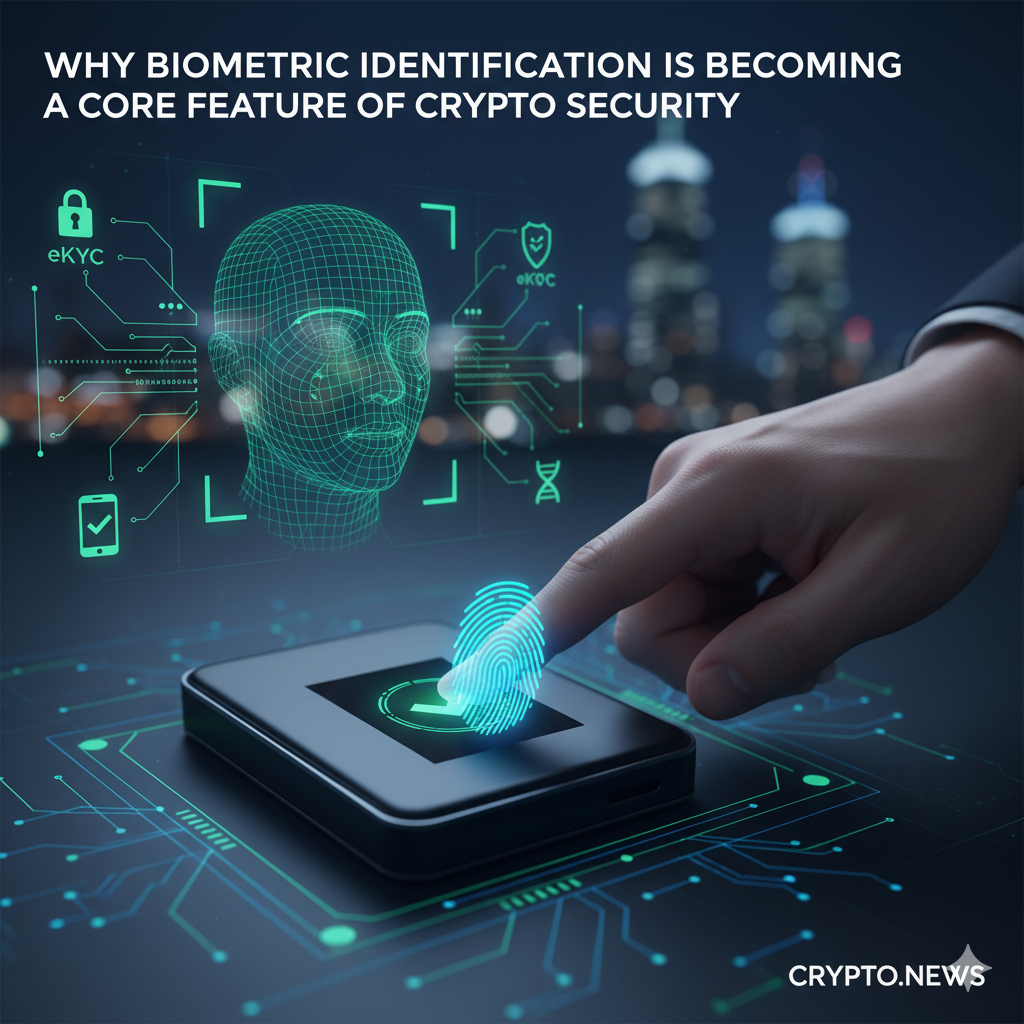
As digital asset theft grows increasingly sophisticated, the cryptocurrency industry is undergoing a security revolution—moving beyond traditional passwords to embrace biometric identification as a core defense mechanism. From major exchanges to innovative wallet providers, platforms are integrating advanced technologies like eKYC verification and liveness detection to create unprecedented security barriers against modern threats.
This shift represents a fundamental transformation in how we protect digital assets, leveraging what you are rather than what you know to secure cryptocurrency holdings against an evolving landscape of cybercrime.
The Biometric Arsenal: Understanding Next-Generation Verification Tools
The move toward biometric protection encompasses several sophisticated technologies working in concert:
-
eKYC (Electronic Know Your Customer): Enables remote identity verification without physical presence, using digital documentation and biometric matching to authenticate users during onboarding and transactions.
-
Face2Face Verification: Compares live facial features against government-issued identification photos, ensuring the person conducting transactions matches the legitimate account holder.
-
Liveness Detection: The critical guard against spoofing attacks, this technology distinguishes between real human presence and photographs or videos, requiring physical existence during verification processes.
These technologies create a multi-layered security approach that’s significantly more difficult to breach than traditional password-based systems. As Trust Stamp seeks regulatory approval for its quantum-secure biometric wallet, the industry is witnessing the convergence of biometric validation with cutting-edge cryptographic protection.
The Hardware-Biometric Convergence: A Powerful Security Partnership
While biometric technology advances, it doesn’t replace hardware security—it enhances it. The most robust protection emerges when these approaches work together:
Hardware wallets provide the foundational security of offline private key storage, generating and maintaining keys in isolated environments away from online vulnerabilities. When augmented with biometric authentication, these devices require physical presence and biological verification before executing transactions, creating a dual-layer protection system.
Modern hardware wallets now incorporate fingerprint scanners and facial recognition alongside military-grade security chips, supporting thousands of cryptocurrencies while maintaining the “cold storage” principle that keeps private keys permanently offline.
The Compelling Case for Biometric Integration
The driving force behind biometric adoption becomes clear when examining contemporary security challenges:
-
Sophisticated Infiltration: Recent intelligence indicates North Korean operatives have compromised up to 20% of cryptocurrency companies, using fake identities to bypass traditional verification and steal over $3 billion in digital assets.
-
Inherent Security Advantages: Unlike passwords that can be guessed, phished, or forgotten, biometric characteristics like facial structure, fingerprints, and voice patterns are unique to each individual and impossible to replicate through conventional hacking methods.
-
Streamlined User Experience: Properly implemented biometric systems reduce friction while increasing security, allowing legitimate users seamless access while creating nearly insurmountable barriers for malicious actors.
Addressing the Critics: Balancing Security and Practicality
Despite clear advantages, biometric technology faces legitimate concerns:
-
Privacy Apprehensions: Systems that store raw biometric data create potential vulnerability points. Advanced solutions now convert biological features into cryptographic templates without retaining the original data, preserving privacy while maintaining security.
-
Reliability Questions: False positives and negatives remain challenges, though modern systems achieve accuracy rates exceeding 99% under optimal conditions.
-
Irreversible Compromise: Unlike passwords, biometric traits cannot be changed if compromised. However, sophisticated systems use one-way encryption that makes stolen biometric data useless for authentication purposes.
The Future of Crypto Security: Biometrics as Standard Infrastructure
The trajectory is clear: biometric identification is transitioning from innovative feature to essential security infrastructure. As regulatory frameworks evolve and quantum computing emerges, the combination of biological verification with advanced cryptography represents the next frontier in digital asset protection.
For cryptocurrency users, this means security is becoming both more robust and more accessible. The future points toward systems where your face becomes your password, your fingerprint your private key, and your biological identity the ultimate safeguard for your digital wealth.